
Wuthering Waves New Resonator Denia Brings Fusion Chaos, Illusions, and Massive Burst Potential


Wuthering Waves New Resonator Denia has rapidly become one of the biggest discussion points surrounding Wuthering Waves Version 3.3. Unlike many standard character releases, Denia enters the game with unusually high narrative focus, dedicated music videos, multiple showcase trailers, and a combat identity clearly designed to reshape Fusion-based team compositions.
At first glance, Denia appears calm, playful, and harmless. However, the deeper presentation surrounding the character reveals something far more unstable and strategically important. Kuro Games positions Denia not simply as another Fusion unit, but as a layered illusion-based Resonator whose mechanics, lore, and personality all revolve around deception, mimicry, and emotional ambiguity.
The core reason why Wuthering Waves New Resonator Denia matters is because Fusion teams previously lacked a truly flexible burst-oriented support hybrid capable of enabling high-pressure rotations without feeling mechanically restrictive. Denia appears specifically designed to close that gap.
Denia is a 5-star Fusion Resonator who uses a Rectifier weapon. Community reactions immediately focused on this combination because Fusion Rectifier users historically occupy highly influential positions within the meta. Players quickly noticed similarities to previous powerful units, especially due to her visual design, elemental alignment, and possible weapon compatibility.
Mechanically, Denia introduces illusion and bubble-based combat systems. Her ornate device creates bubbles capable of protecting allies against Voidmatter while simultaneously trapping enemies inside illusionary spaces. This combination gives her a combat identity that feels both defensive and offensive at the same time.
That duality is important because many existing Resonators lean heavily toward either raw DPS or pure support utility. Denia instead appears designed around controlled battlefield manipulation. Her kit creates pressure through confinement, delayed burst setups, and layered Fusion interactions rather than straightforward spam damage.
Another major aspect of Wuthering Waves New Resonator Denia is form switching. According to early Version 3.3 information, Denia constantly alternates between two forms during combat. This is not just visual flair. Form switching appears tied directly to burst amplification and support effects, making rotation timing extremely important.
For experienced players, this immediately signals high ceiling potential. Characters with stance changes or dual-state mechanics generally scale better over time because optimization routes become deeper. The downside, however, is increased execution complexity.
Narratively, Denia is also one of the more psychologically unusual Resonators introduced so far. Official showcase material repeatedly references “human mimicry protocol,” emotional assimilation, deception, and false identity structures. Rather than presenting herself as openly dangerous, Denia performs normality.
That distinction matters because the game intentionally creates uncertainty around her sincerity. She smiles constantly, jokes casually, and behaves gently, but almost every official description hints at concealed motives. The line “If the world is made of little lies to begin with, why be afraid of all the deception in our lives?” effectively summarizes her thematic role.
The presentation surrounding Wuthering Waves New Resonator Denia also leans heavily into emotional dissonance. She is simultaneously framed as warm-hearted and manipulative, observant yet detached, caring yet fundamentally artificial in some way. This layered characterization is one reason community attention around her became unusually intense.
From a gameplay perspective, Fusion teams are expected to benefit significantly from Denia’s arrival. Prior to Version 3.3, many Fusion-focused players felt the archetype lacked a cohesive modern support core. Community discussions repeatedly mentioned hopes that Denia would stabilize Fusion burst compositions rather than functioning as another isolated DPS unit.
Early theorycrafting suggests possible synergies involving Chisa, Phrolova, and other Fusion-oriented Resonators. Some players believe Denia may become the missing centerpiece that finally enables a fully optimized Fusion Burst team structure.
This matters because elemental synergy defines long-term endgame viability in Wuthering Waves. Characters rarely exist independently. Their value depends heavily on how efficiently they integrate into rotation ecosystems. A Resonator that improves multiple existing units simultaneously often becomes more valuable than a standalone hypercarry.
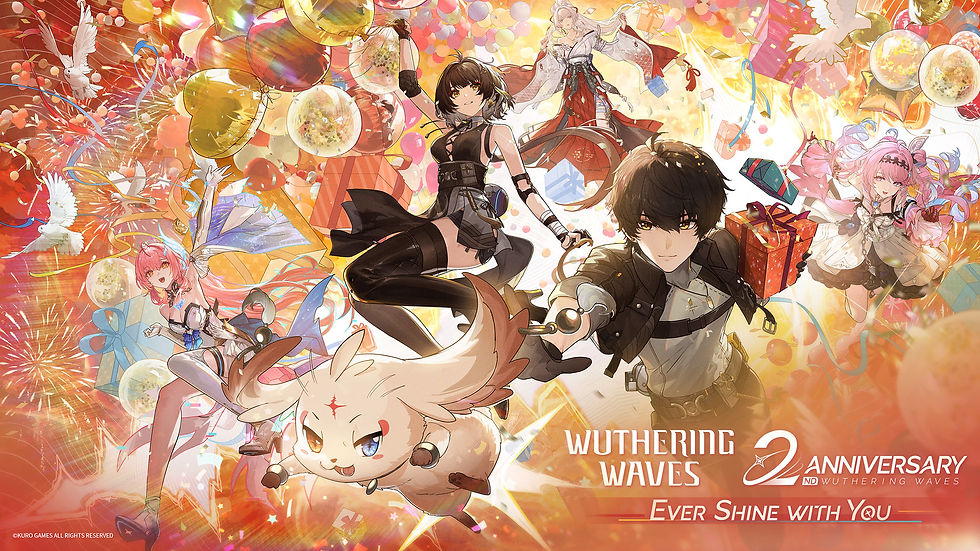
The Version 3.3 update itself, titled Reverbs From the End of Galaxies, amplifies Denia’s importance even further. The patch is tied directly to the game’s second anniversary celebration, meaning Kuro Games intentionally positioned her as one of the update’s central attractions.
That strategic placement matters. Anniversary patches typically carry higher player return rates, stronger marketing visibility, and heavier monetization pressure. Launching Denia during this period suggests strong developer confidence in the character’s popularity and pull performance.
The update also includes major story expansion through Beneath a Melting Night Sky, alongside multiple challenge events, exploration activities, and anniversary rewards. However, despite all the additional content, Denia remains the dominant discussion point surrounding Version 3.3.
Another reason why Wuthering Waves New Resonator Denia gained traction is aesthetic design. Community reactions heavily emphasized her appearance, animations, and overall visual direction. Discussions ranged from admiration of her elegance to jokes about players immediately abandoning previous Fusion mains for her.
This type of response matters because character attachment strongly influences banner performance in gacha-driven games. Mechanics alone rarely determine pull success. Personality presentation, visual distinctiveness, and emotional resonance often matter just as much.
Denia benefits heavily from this combination. Her design blends softness with latent menace, creating strong contrast. Her smile feels intentionally difficult to read. Her abilities look graceful rather than explosive, yet their implied danger remains obvious.
Kuro Games also amplified engagement by releasing multiple showcase formats rather than a single reveal trailer. Instead of only displaying combat numbers, they built narrative atmosphere around her identity. This creates stronger emotional investment before players even experience the character directly.
The music-focused promotional strategy is another major factor. Multiple promotional videos centered on Denia’s perspective created the impression that she is not just another banner unit, but a narrative centerpiece. This elevates perceived importance dramatically.
From a meta standpoint, one of the biggest open questions surrounding Wuthering Waves New Resonator Denia involves weapon compatibility. Many players immediately speculated about whether existing high-tier Rectifiers would remain optimal for her or if her signature weapon would become mandatory.
This concern reflects broader gacha economy anxiety. Players want powerful new units, but they also want efficient resource usage. If Denia performs well with previously acquired weapons, her adoption rate may become significantly higher.
There is also speculation regarding her exact battlefield role. Some players believe she functions primarily as a sub-DPS enabler, while others expect hybrid support capabilities. The uncertainty itself fuels additional discussion because incomplete information encourages theorycrafting.
Importantly, Denia’s release occurs alongside broader expansion plans for Wuthering Waves. Developers already teased Version 3.4 content, including Lucilla and the upcoming Cyberpunk: Edgerunners collaboration. This positions Denia as part of a larger momentum-building phase for the game rather than an isolated release.
That context matters because live-service RPGs depend heavily on cadence. Strong consecutive updates maintain player confidence and reduce engagement collapse between patches. Denia functions as both a gameplay addition and a bridge toward future expansion cycles.
Another reason the Wuthering Waves New Resonator Denia performs strongly in search is because it combines multiple player interests simultaneously: lore, meta relevance, visual design, team optimization, anniversary rewards, and future story implications.
The strongest character releases in modern gacha games typically succeed when they operate across all these layers simultaneously. Denia appears designed precisely for that purpose.
In conclusion, Wuthering Waves New Resonator Denia represents far more than a standard banner addition. She introduces new Fusion synergy potential, illusion-based battlefield control, emotionally layered storytelling, and one of the game’s most heavily stylized promotional campaigns so far. Her release during Version 3.3’s anniversary period signals major strategic importance for both the current meta and the broader future direction of Wuthering Waves.


Great post! Everything feels simple and clear, making it enjoyable to read without any confusion. The F1 reaction time test sounds interesting for anyone who follows Formula 1. You can try responding to the starting lights and see how quickly you react to the signal. I like that it offers a quick challenge without needing any special equipment or complicated setup.
Sharon’s introduction to the roster brings a unique tactical depth similar to how strategic tile combinations work in a 麻雀 web online. The poison-based mechanics require real patience and foresight. It is fascinating to see how the season concludes with such a specialized character meant for high-level meta stabilization and attrition.
I appreciate how Drive Mad focuses on precision rather than flashy graphics. The gameplay itself is strong enough to keep players coming back.
If you are looking for a fun online driving game, Drive Mad is an excellent choice. The unique physics system and creative level design make every stage feel different. I always come back to this game because it’s both challenging and satisfying to play!