
The Technology Behind Clash of Clans: How Supercell Built a Mobile Gaming Giant


More than a decade after its launch, Clash of Clans remains one of the most successful mobile games ever created. While many games rise to popularity and disappear within a few years, Clash of Clans continues to generate hundreds of millions of dollars annually while maintaining tens of millions of active players worldwide.
The secret behind this longevity is not simply clever game design or memorable characters. The real story lies beneath the surface. The technology behind Clash of Clans has evolved into one of the most sophisticated mobile gaming infrastructures in the industry, combining proprietary software, cloud computing, large-scale data processing, and strategic engineering decisions that continue to support millions of players every day.
Understanding the technology behind Clash of Clans helps explain why the game remains relevant in 2026 and why Supercell continues to be one of the most influential companies in mobile gaming.
Clash of Clans: A Mobile Gaming Phenomenon
When Clash of Clans launched on iOS in 2012 and Android in 2013, few could have predicted its long-term success.
Today, the game has achieved:
Billions of dollars in lifetime revenue
Tens of millions of daily active users
Hundreds of millions of monthly players across Supercell's ecosystem
Continuous presence in top-grossing mobile game charts
Unlike many competitors, Clash of Clans has successfully adapted to changing technology, evolving player expectations, and increasingly competitive mobile gaming markets.
This success is largely driven by technical decisions made years ago that continue to pay dividends today.
Why Supercell Built Its Own Game Engine
One of the most important technological decisions behind Clash of Clans was Supercell's choice to build a proprietary engine rather than relying entirely on commercial solutions.
Introducing Titan
The engine powering Clash of Clans is called Titan.
Titan serves as the foundation for every major Supercell game, including:
Clash of Clans
Clash Royale
Brawl Stars
Boom Beach
Hay Day
Unlike engines designed primarily for PC or console games, Titan was built specifically for mobile devices.
This distinction matters.
Most developers using engines such as Unity or Unreal must spend significant resources adapting desktop-oriented technology to mobile hardware limitations.
Supercell took a different path.
By designing Titan specifically for mobile devices from the beginning, the company optimized performance around the realities of smartphone gaming.
Built for Every Smartphone
One reason Clash of Clans remains accessible worldwide is Titan's ability to support a broad range of devices.
Many studios prioritize high-end smartphones.
Supercell focuses on everyone.
Mobile-First Engineering
Titan is designed to run effectively on:
Premium flagship phones
Mid-range Android devices
Older smartphones
Budget hardware
This strategy dramatically expands the potential audience.
Rather than limiting access to users with expensive devices, Supercell ensures that players with older phones can still enjoy a smooth experience.
The result is a much larger player base across global markets.
Client-Side Technology Powering Clash of Clans
On individual devices, Clash of Clans combines multiple programming technologies to maximize performance.
C++ for Performance
Critical gameplay systems are written in C++.
These systems include:
Troop movement
Pathfinding
Combat calculations
Physics interactions
Rendering systems
C++ provides the speed necessary for responsive gameplay while minimizing hardware strain.
Objective-C Integration
On Apple devices, Objective-C helps manage platform-specific functions and operating system integration.
This combination allows Clash of Clans to deliver consistent performance across different hardware environments.
The Challenge of Deterministic Battles
One of the most fascinating technical aspects of Clash of Clans involves battle simulation.
Every attack replay must reproduce exactly what happened during the original battle.
This requires deterministic simulation.
Why Replays Matter
When players watch replays:
Troop movements must match perfectly
Damage calculations must remain identical
Building destruction must occur at the same moments
Outcomes must remain unchanged
To accomplish this, the same game logic executes consistently across:
Android devices
iPhones
Tablets
Cloud servers
Even tiny inconsistencies could cause replays to break.
Maintaining perfect synchronization across millions of battles is a remarkable engineering achievement.
The Server Infrastructure Behind Clash of Clans
While the client application handles gameplay visualization, much of the game's operation depends on powerful backend systems.
Java-Based Backend Architecture
The Clash of Clans server infrastructure relies heavily on Java.
Java remains one of the most trusted technologies for large-scale systems because it provides:
Reliability
Scalability
Consistent performance
Strong ecosystem support
Many financial institutions and enterprise platforms use Java for similar reasons.
For a game supporting millions of simultaneous users, stability is essential.
Rust for Performance-Critical Tasks
In areas where maximum efficiency is required, Supercell also incorporates Rust.
Rust offers:
High performance
Memory safety
Low-level optimization
This combination helps maintain responsiveness during peak player activity.
How AWS Powers Clash of Clans
Supercell relies heavily on Amazon Web Services (AWS) to support its global operations.
AWS provides the infrastructure necessary to keep Clash of Clans available around the clock.
Core AWS Services Used
Amazon EC2
Virtual servers process gameplay operations and player data.
AWS Lambda
Event-driven tasks execute automatically without dedicated server allocation.
API Gateway
Handles communication between applications and backend services.
Global Availability
Multiple AWS Availability Zones provide redundancy.
If one data center experiences issues, others continue operating.
This architecture helps minimize downtime and maintain service reliability.
Managing Billions of Game Events
Every action performed by players generates data.
Examples include:
Training troops
Upgrading buildings
Launching attacks
Clan donations
Resource collection
At Clash of Clans scale, these actions quickly become enormous.
Event Processing at Massive Scale
Supercell processes tens of billions of in-game events every day.
This information supports:
Analytics
Balancing decisions
Fraud detection
Player behavior analysis
Feature optimization
Rather than relying on guesswork, developers use real-world data to improve gameplay systems.
ScyllaDB and Real-Time Data Storage
Managing data for millions of active players requires specialized storage solutions.
ScyllaDB Cloud
Supercell uses ScyllaDB Cloud for high-performance data persistence.
The system stores:
Clan activity
Social interactions
Event history
Gameplay records
Fast access to this information helps support real-time experiences across all Supercell games.
The Strategic Depth That Keeps Players Engaged
Technology alone cannot explain Clash of Clans' success.
The game's systems also create extraordinary strategic depth.
Base Building Strategy
Defensive layouts require players to consider:
Building placement
Trap positioning
Wall segmentation
Defensive coverage
Each update introduces new considerations that force players to adapt.
Attack Planning
Offensive gameplay involves:
Troop deployment timing
Spell management
Hero abilities
Resource efficiency
Successful attacks often resemble tactical puzzles requiring both preparation and execution.
Resource Management and Long-Term Progression
Clash of Clans incorporates several interconnected progression systems.
Players must manage:
Gold
Elixir
Dark Elixir
Builder availability
Strategic planning can span months or even years.
This long-term progression creates a strong sense of investment and accomplishment.
The Importance of Clan Communities
Another reason for the game's longevity is its social structure.
Clan-Based Gameplay
Clans provide:
Cooperative objectives
Shared progression
Competitive events
Social interaction
Many players remain active primarily because of relationships formed within their clans.
This social layer significantly increases retention compared to purely single-player experiences.
Supercell's Continued Investment in Technology
Despite its success, Supercell continues investing heavily in infrastructure and engineering.
Recent company disclosures reveal:
Expansion of Titan development teams
New rendering technologies
Advanced compression systems
Improved creative tools
Increased cloud infrastructure investment
The company recognizes that long-term success depends on continuous technical innovation.
Artificial Intelligence and the Future of Clash of Clans
Supercell leadership has also expressed optimism regarding artificial intelligence.
Rather than viewing AI as a threat, the company sees opportunities to:
Improve development workflows
Enhance content creation
Accelerate iteration cycles
Support creative teams
According to Supercell executives, AI is expected to complement human creativity rather than replace it.
Why Clash of Clans Still Matters in 2026
Many games succeed temporarily.
Few remain relevant for more than a decade.
The technology behind Clash of Clans demonstrates why the game continues thriving long after its initial release.
By building proprietary technology, investing in scalable infrastructure, supporting older devices, and maintaining strategic depth, Supercell created a platform capable of evolving alongside both players and technology.
The result is more than a successful mobile game.
It is a case study in how thoughtful engineering, long-term planning, and continuous innovation can transform a simple mobile title into one of the most enduring entertainment products of the modern gaming era.


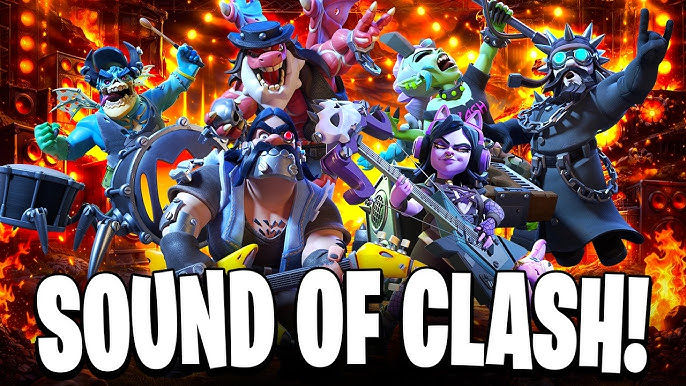
The strongest point here is that longevity came from architectural choices made long before the game reached today’s scale. Titan’s mobile-first design broadened device support, but deterministic battle replays are the more interesting lesson: troop movement, damage, and destruction must reproduce identically across phones and cloud servers. That turns “replay” into a systems-design problem, not merely a visual feature. A smaller example of the same testable approach appears in this explanation of daily sorting challenges. Fixed schedules, rule-specific validation, and replayed solution paths make outcomes reproducible rather than merely random. Both cases show why reliable game systems depend on separating presentation, saved state, validation, and authoritative logic.
Comprobar los resultados es mucho más cómodo cuando la información aparece actualizada y correctamente identificada. Quienes buscan fantasy 5 resultados de hoy en vivo pueden consultar las combinaciones de la jornada y compararlas con sus números de manera sencilla.
I fully agree with the author that Supercell’s self-developed Titan engine, scalable cloud backend and cross-device optimization lay solid technical foundations for Clash of Clans’ decade-long dominance. Its tailored mobile infrastructure and massive data processing capacity perfectly explain the game’s lasting global popularity. From my perspective, integrating AI tools to streamline game balancing and content updates will further extend the title’s competitive edge in the mobile gaming market. --glow up
I keep returning to Drive Mad because the levels are short and easy to replay. It’s a great option when you only have a few spare minutes.
Thanks for sharing this information. I’ve been researching MBBS universities in Russia, and Kemerovo State Medical University looks interesting because of its affordable tuition fees and English-medium program. It would be great to hear from current students about their experience with the university and clinical training.