
Brawl Stars Gaming Anthem Reality

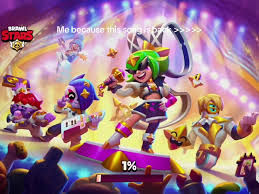
Brawl Stars Gaming Anthem has quickly become one of the most talked-about crossover topics in gaming and music, driven by the explosive release of “Hypercharged,” the new track created through the collaboration between Brawl Stars and Electric Callboy. This is not just another promotional song attached to a mobile game update. It is a deliberate attempt to turn a game character, a music release, and a broader brand identity into one synchronized cultural event. For fans of fast multiplayer action, aggressive electronic sounds, and high-energy entertainment, Brawl Stars Gaming Anthem now points directly to one thing: Hypercharged.
The reason Brawl Stars Gaming Anthem matters is simple. Most game songs are disposable. They are made for a trailer, used for a short campaign, and forgotten within weeks. Hypercharged is built differently. The track is structured like a real standalone release, not just a marketing asset. It carries the signature style of Electric Callboy, blending EDM intensity, metalcore aggression, dancefloor momentum, and catchy hooks into a sound that feels both chaotic and controlled. That makes it unusually effective as a gaming anthem, because Brawl Stars itself thrives on short bursts of chaos, sharp timing, explosive action, and highly recognizable character identity.
In that sense, Brawl Stars Gaming Anthem is not just a keyword around a song. It represents a perfect thematic match between a game and a band. Electric Callboy has always leaned into excess, irony, rhythm, and spectacle. Brawl Stars, as a game, operates with the same logic. It is colorful, loud, fast, exaggerated, and immediately readable. This collaboration works because neither side had to fake compatibility. The partnership feels natural rather than forced, and that is rare in gaming music campaigns.
Hypercharged also arrives at a useful moment for Brawl Stars. Mobile games constantly fight for attention in an overcrowded market where updates, skins, and events come and go at high speed. Standard trailers are no longer enough to dominate conversation. A proper Brawl Stars Gaming Anthem gives the game something stronger: a reusable identity signal. Players do not just remember a patch or a skin. They remember the sound, the mood, and the energy. When a campaign can create that kind of memory, it lasts longer than a normal update cycle.
The track itself is engineered for impact. It pulls from the same sonic DNA that made Electric Callboy popular: crushing beats, glossy synth textures, aggressive vocals, pop accessibility, and constant momentum shifts. That matters because the phrase Brawl Stars Gaming Anthem only works if the song genuinely feels like something that could soundtrack a live competitive match, a hype trailer, or a player-made montage. Hypercharged does. It sounds like urgency. It sounds like overload. It sounds like a fight about to explode.
A major strength of this Brawl Stars Gaming Anthem is how tightly it connects to character storytelling. Hypercharged is not just background music; it is tied directly to Damian, a new Brawl Stars character introduced through the collaboration. That move is smart. Instead of releasing a random branded single, Brawl Stars uses the song to anchor a new identity inside the game world. Damian is presented as heavy, volatile, theatrical, and impossible to ignore. Electric Callboy described him as if he was built for their sound, and that is the entire point. The character and the anthem reinforce each other.
Damian’s story adds even more weight to the Brawl Stars Gaming Anthem narrative. He is not framed as a generic edgy addition. He survived heart failure and repeated surgeries, now fights with a pacemaker, and claims to have a true metal heart. That phrase matters because it bridges literal character lore and musical genre symbolism. Hypercharged becomes more than a title. It becomes a thematic descriptor for Damian’s entire design: pressure, survival, voltage, intensity, and rhythm. The result is a stronger launch than what most mobile game characters receive.
The integration also works visually. The music video for Hypercharged combines live-action Electric Callboy scenes with Brawl Stars animation, creating a hybrid presentation that avoids feeling like a simple ad. The band appears in absurd and theatrical roles, while the game footage keeps the focus tied to the Brawl Stars universe. This matters for SEO intent around Brawl Stars Gaming Anthem because many users are not just searching for the song name. They are trying to understand why the collaboration stands out, who Damian is, and why the music feels more substantial than a normal promotional theme.
Another reason Brawl Stars Gaming Anthem is gaining traction is because Electric Callboy is not a niche unknown attached to a random gaming promo. The band has an established global audience and a strong reputation for turning genre collision into something fun and high-impact. They have already proven they can turn loud, absurd, and hyper-energetic concepts into viral content. Bringing that ability into a Brawl Stars collaboration expands the game’s reach beyond its existing player base. Fans of the band now have a reason to look at the game, while players of the game have a reason to engage with the track as a real music release.
That two-way audience flow is what makes this Brawl Stars Gaming Anthem strategically strong. It is not just internal fan service for existing players. It is external audience capture. Good crossover marketing does not simply reward the current audience; it expands the edge of the community. Hypercharged does exactly that. It creates overlap between heavy music audiences, gaming communities, short-form video culture, and character-based fandoms.
There is also a timing advantage. Hypercharged arrives alongside the album rollout for Tanzneid, Electric Callboy’s upcoming release. That means the Brawl Stars Gaming Anthem is connected to a broader promotional machine rather than isolated inside the game’s own news cycle. Every album mention, tour conversation, and media write-up around the band gives extra visibility to the Brawl Stars collaboration. That creates compounding exposure, which is much stronger than a one-platform campaign.
From a brand perspective, Brawl Stars Gaming Anthem also helps position Brawl Stars as more culturally active than many other mobile titles. A lot of mobile game marketing is repetitive: seasonal skins, event trailers, routine teaser art, and influencer clips. Those tactics still work, but they rarely feel memorable. A custom anthem by an established band is different. It signals ambition. It tells the audience that Brawl Stars wants to operate not only as a game but as an entertainment brand capable of producing moments that spill into music culture.
The phrase Brawl Stars Gaming Anthem is also likely to sustain search demand because it covers multiple user intents at once. Some players want the song itself. Some want the Damian release details. Some are looking for the music video. Others are trying to understand the album connection with Tanzneid. That layered search intent is useful because it gives the keyword more staying power than a single patch-note style phrase. It connects gameplay, soundtrack, character launch, and artist promotion into one topic cluster.
Hypercharged also benefits from being genuinely suitable for fan reuse. A weak tie-in track dies quickly because players do not adopt it. A good gaming anthem gets cut into edits, montages, reels, reaction videos, and discussion posts. This is where the song’s aggressive rhythm and catchy structure matter. It is made for clips. It is made for repeated play. It is made to sit behind highlight videos and fast-motion chaos. That gives Brawl Stars Gaming Anthem a second life beyond its official release.
For Brawl Stars itself, that matters because community-made distribution is stronger than paid repetition. Once players start using the anthem in their own content, the campaign becomes self-extending. Supercell no longer has to force visibility. The audience does part of the work. That is one of the clearest signs that a gaming anthem is functioning properly: it escapes the official channel and starts circulating in player behavior.
The Damian connection is especially important here because Brawl Stars succeeds when characters feel distinct, memeable, and readable. A good brawler design is not just about mechanics. It is about iconography. Damian now arrives with all the necessary ingredients: a dramatic backstory, a strong audio identity, an established trio connection within MadEvil Manor, and an anthem that makes him feel larger than a standard roster addition. That is efficient character branding.
The song title itself, Hypercharged, is also strategically sharp because it fits both music and game language. In music terms, it implies tempo, overload, and intensity. In gaming terms, it feels like a power state, a boost, or a dangerous escalation. So when people search Brawl Stars Gaming Anthem, Hypercharged is an easy phrase to remember because it maps cleanly onto both domains. That dual readability improves recall.
Another advantage is tonal fit. Many gaming collaborations fail because the guest artist imposes a style that clashes with the game’s identity. That problem does not exist here. Electric Callboy’s mix of chaos, theatricality, and absurd confidence aligns well with Brawl Stars’ exaggerated world. The result is a campaign that feels loud without feeling random. It is excessive, but in a controlled and recognizable way.
In practical terms, Brawl Stars Gaming Anthem now stands as one of the more effective examples of how a mobile game can use music not as decoration, but as identity infrastructure. Hypercharged is doing several jobs at once: launching a character, amplifying a game update, feeding a band’s album cycle, generating video content, and giving fans a memorable audio hook attached to the Brawl Stars brand. Most campaigns fail because they try to do too much and become incoherent. This one works because all parts point in the same direction: intensity.
That is why Brawl Stars Gaming Anthem is not just a temporary spike topic. It reflects a broader shift in how games compete for attention. Strong games no longer market themselves only through gameplay systems. They market themselves through songs, characters, moods, and cultural signals that can travel outside the app. Hypercharged proves Brawl Stars understands that.
For players, the value is obvious. They get a new character with a clearer identity, a song that actually sounds worth replaying, and a crossover that feels more substantial than a basic ad tie-in. For Brawl Stars as a brand, the gain is larger. It gets an anthem with enough force to carry conversation beyond patch notes and beyond the usual mobile game bubble. That is exactly what a successful Brawl Stars Gaming Anthem should do.


The part about turning Hypercharged into one synchronized cultural event really clicked for me—it’s rare to see a mobile game track feel this intentional instead of just background noise. Electric Callboy’s energy fits Brawl Stars perfectly, so I’m curious how long this anthem stays in rotation. By the way, I keep a free Fortnite Sprite checklist & tracker I like to share: https://spritechecklist.net/sprites/ironmouse-sprite
This was a really interesting read! I hadn't thought about "Hypercharged" in the context of a synchronized cultural event before, but that makes so much sense. It's a clever move to weave the music directly into the game's identity like that. It actually reminds me a bit of how some online tools, like a Cursive Generator, can take something simple and transform it into something unique and engaging for different uses. It's all about that integration.
Been playing eggy car during study breaks recently. I like that there’s no complicated setup or downloads, just open the page and start driving immediately.
As the adventure unfolds in Trees Hate You players see that trees hate you and the environment becomes more intriguing with every new discovery
The energy behind “Hypercharged” really matches the fast-paced chaos of Brawl Stars, making it feel more like a true gaming anthem than just a promo track. It even gives off the same competitive vibe you get when playing intense 2 player games, where quick reactions and high energy make every match exciting.